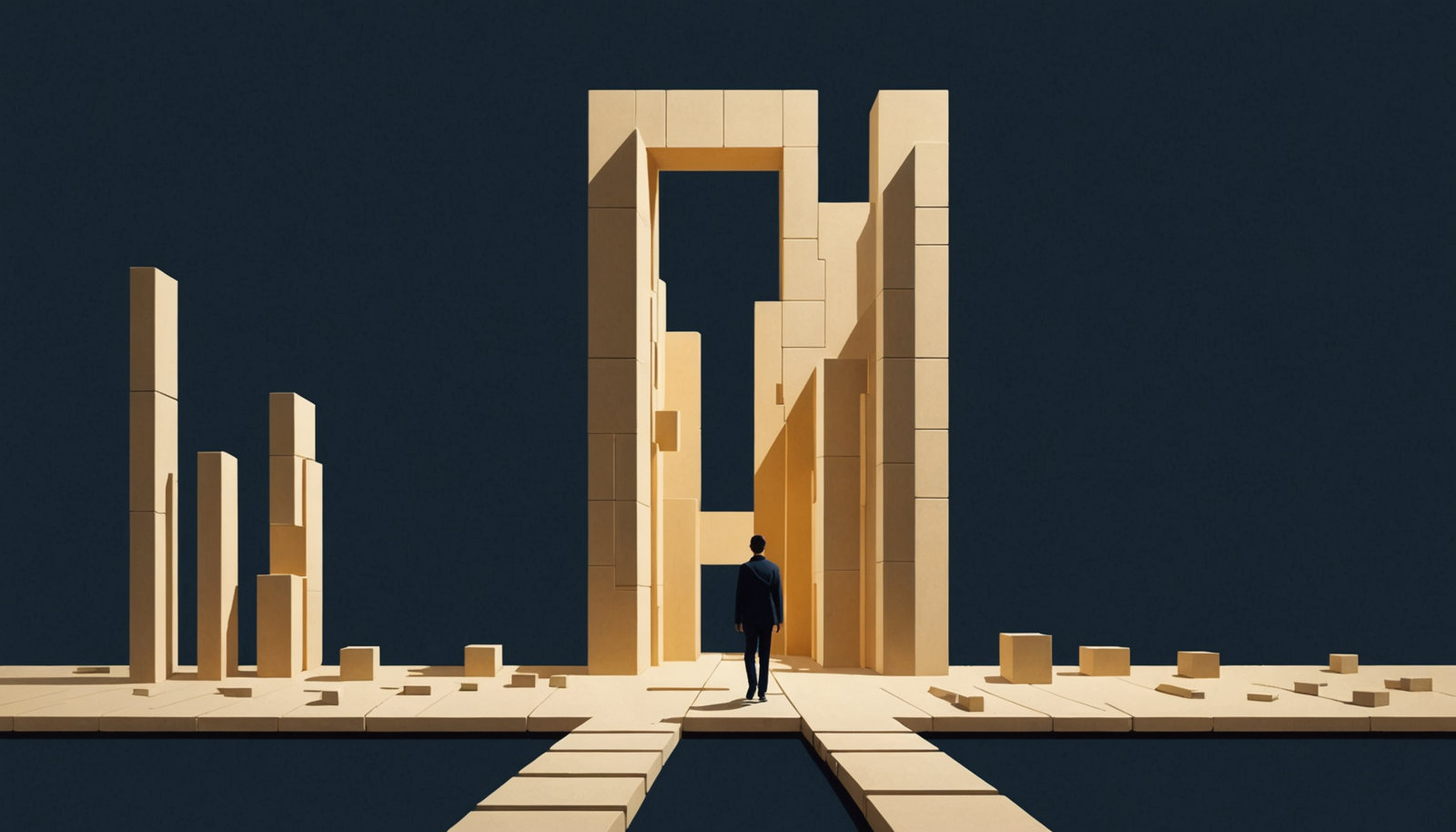
Proportion, people. Everything is proportion.
One of the most important principles in applied psychology is that a sensible rule of life, adhered to in an extreme form, turns into an infection that disables and poisons every good patch of your life.
It is painful to see that rigidity, that blindness, that head against the wall which breaks up families and couples.
Take self-reliance, for example.
Look, I adore people who take responsibility, who do not come complaining to others, who prefer to lean on themselves and try to cope alone with the tasks of life before playing the victim and blaming the environment, society, the government and your sister.
So what is the problem? Like chocolate, it is lovely until you overdo it.
I have met men and women along the way who prided themselves grandly on relying only on themselves — which is only half an affliction — and it is almost always accompanied by the lethal addition: never believe in others. In this world, if you do not look after yourself, nobody will look after you.
I admit there is something very attractive in presenting yourself as a lone wolf. It almost always arouses in a partner a longing to take care of you or to lean on you, and in such an egocentric world it is very tempting to connect with someone who ostensibly needs nothing from you, because he looks after himself.
So to all the lone wolves out there — calm down. We are on to you. Deep down, you know you are a fake.
Perhaps you have learned over time to believe the lie you are selling yourself. But I would like to share some critical observations on the phenomenon.
One. Nobody can genuinely do everything alone. Not you either.
Two. The stance is usually not strength but pre-emption. If you never rely on anyone, nobody can ever let you down. That is not resilience. That is a very well-organised fear.
Three. It quietly punishes the people who love you, because it denies them the one thing that makes them feel useful to you.
Four. It works beautifully until the first thing that is genuinely too big for one person — an illness, a death, a collapse — and then the structure that felt like independence turns out to have been isolation with better branding.
Self-reliance is a fine instrument. It is a catastrophic identity.