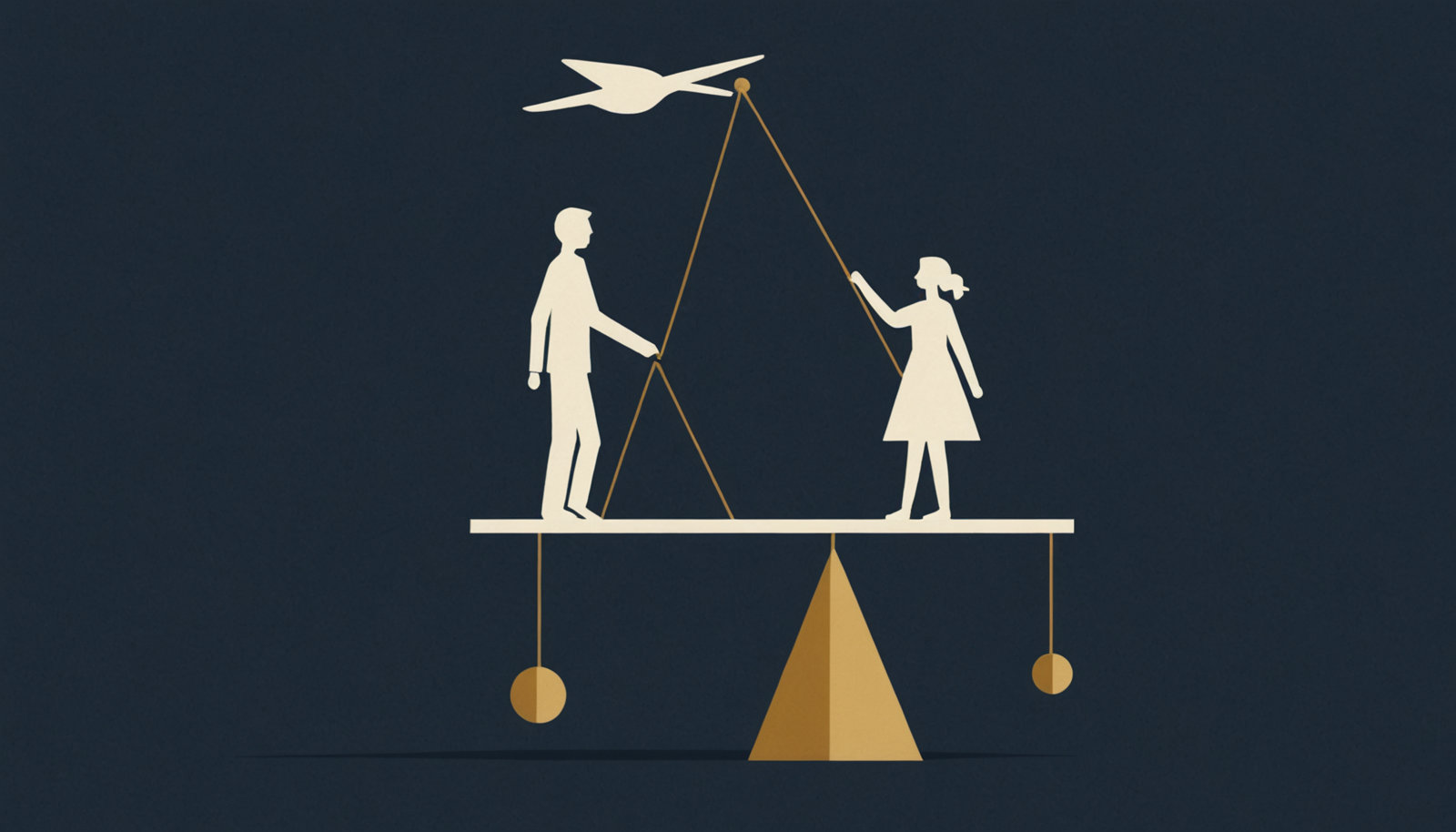
Sometimes all we need is the grey, clichéd and calming word: proportion.
And to my mind there is nowhere it is needed more than in the way you relate to yourself.
You can be your own best friend, and you can be a bleeding and dangerous enemy who eliminates every possible chance of happiness in your future.
The subject we convened for this morning is the important, essential and invisible difference between self-criticism and self-flagellation.
None of us is perfect, and we are sentenced to err, and it matters greatly that along the journey of life we learn to correct those errors, so that we do not gamble for the hundredth time on a crashing stock. We do not have enough psychological money for that.
But sometimes a malfunction occurs on the production line of our soul, and the psyche gets stuck in a permanent state of lethal self-judgement. That is called self-flagellation.
It is not a good thing.
Self-flagellation is only the other side of an ugly coin. On the first side is written arrogance and irritability towards everybody else.
One. Self-criticism focuses on something. Self-flagellation does not.
For example — you forgot his birthday? Unpleasant. Definitely unpleasant. A person with a properly calibrated self-criticism switch registers the specific failure, notes what produced it, and arranges a reminder.
Self-flagellation does not stay on the birthday. Within ninety seconds it has arrived at what kind of person forgets, and from there at a general account of your inadequacy that no evidence could settle.
Two. Self-criticism ends. Self-flagellation is a climate.
Three, and the practical tell: after genuine self-criticism you do something. After self-flagellation you feel something, extensively, and then behave exactly as before.
Which is why self-flagellation is not a stricter version of self-criticism. It is the thing that replaces it — and the people hardest on themselves are very often the people who change least.