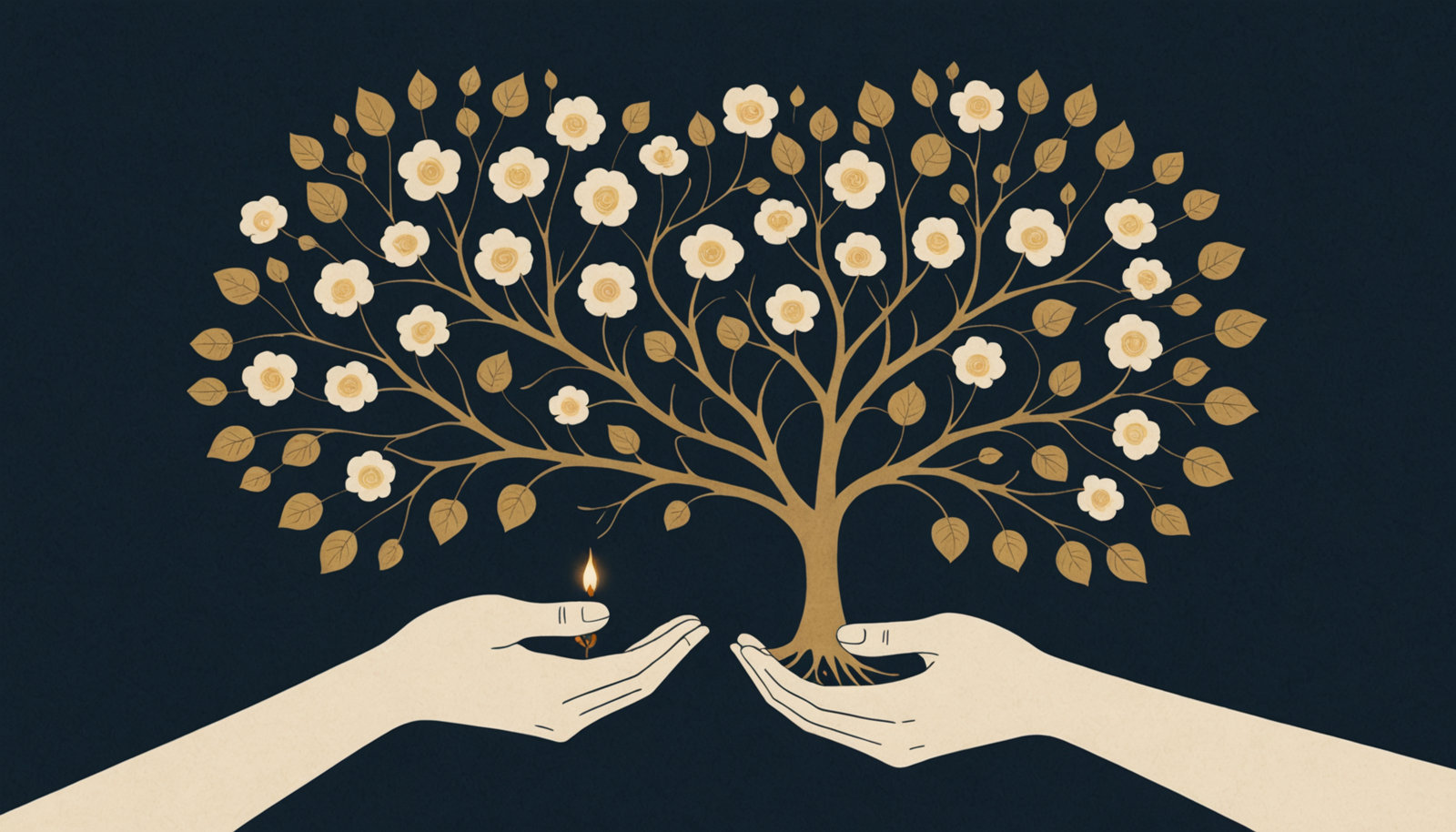
Love is a process. It starts as one thing, and over the years becomes something else. That is the rule.
And let us throw the myth of the serious relationship into the bin: every serious relationship will begin as an unserious one. The seriousness of a relationship consolidates gradually, along with the development of the relationship itself.
The research literature distinguishes two kinds of love, and the distinction is genuinely useful.
One: passionate love.
This includes the experience of falling in love — adrenaline, hormones, physiological arousal — together with the intellectual interpretation we place on it. It is a physiological phenomenon no less than a psychological one, associated with elevated dopamine in the pleasure regions of the brain.
The findings here are interesting: men tend to fall in love more readily than women, but women, when they do fall in love, experience it at a higher intensity.
Two: companionate love.
The sense of closeness and affection we feel towards those whose lives are deeply interwoven with our own.
And here is the thing that determines whether a relationship survives, which is not the presence of either one.
It is the switch.
Passionate love has a limited term. It is not designed to persist and it does not, in anybody, ever. What varies between couples is not whether it declines — it always declines — but whether anything was being built underneath it while it ran.
Where something was, the decline is experienced as a change of state, and frequently a relief. Where nothing was, the identical decline is experienced as the end of love, because it was.
Which means the years in which everything is easy are not the reward. They are the window.