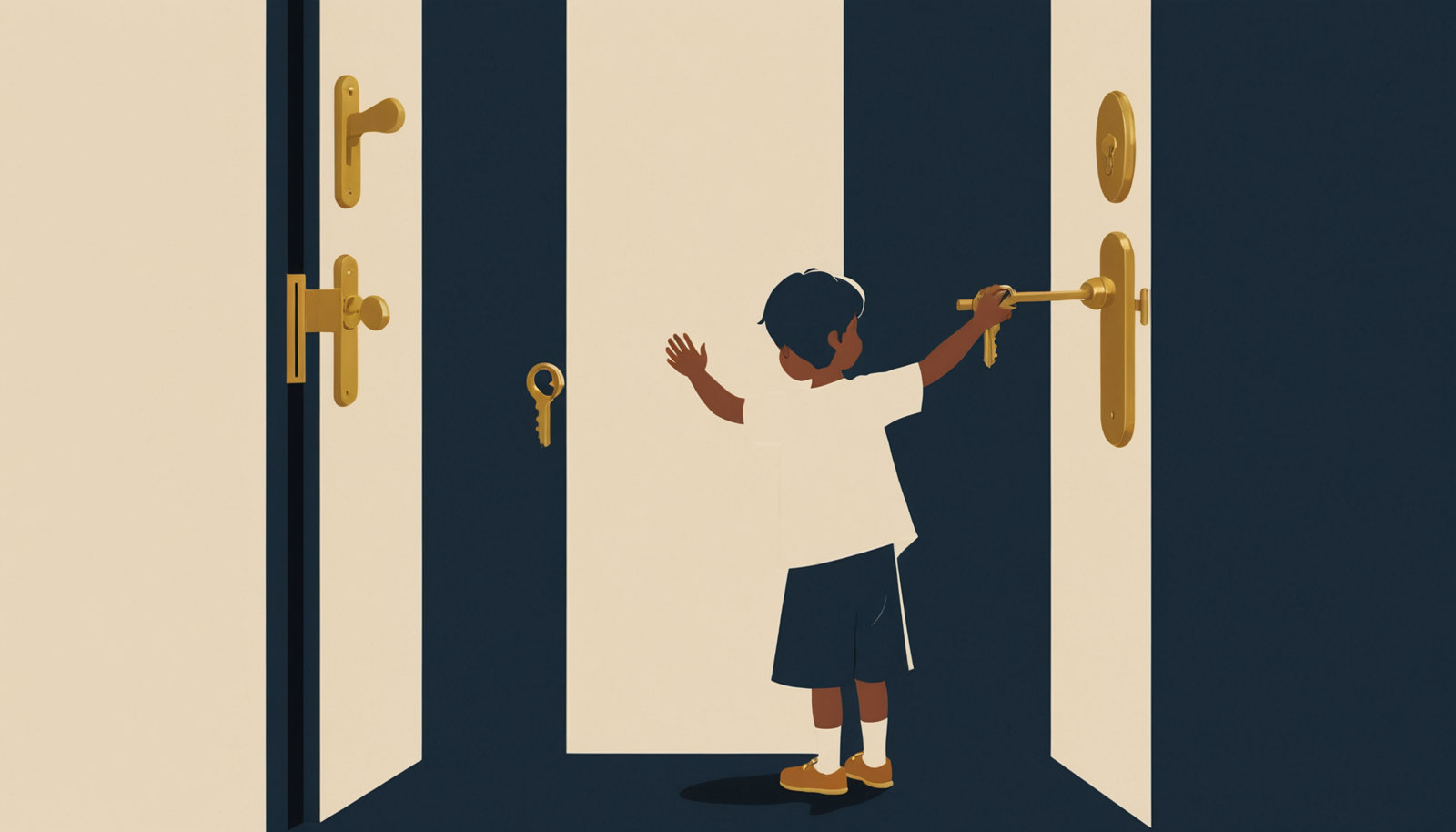
Secrets are an important thing. Otherwise they would not have been invented.
We all keep secrets from people we love. Yes, you too.
We do it because, for one reason or another, we judge that they would not be able to cope with the information. And do you know what? A great deal of the time we are right.
Secret is an important element in the psyche. To know that something has been given secret status means there is something valuable here, and perhaps worth deciphering — which incidentally leads to the mistaken strategy of playing hard to get.
And that is how our children were supposed to grow up. We and the world present them with secrets, and they are supposed to decipher them.
Because that is one of the direct meanings of the word development — to discover the secrets of the universe, and of life, and of everything else.
A child has to make an effort to uncover the secrets about money, about evil and danger, and about what mother and father actually do when they close the door.
He cannot receive the secret now, immediately. He has to make an effort, he has to learn, he has to encounter things gradually.
Do you know why?
Because he has to make himself worthy of the secret. To prove that if we hand him the information, he will use it well. Without endangering himself.
When my daughter is five, I do not tell her the state of my bank account. It is too big for her. It is not appropriate. This is her time to whisper with her friends and to think the world is a fascinating place worth getting to know.
And then the internet arrived. And a second later, social media.
And that was that. There are no secrets any more.
You can read one person's hatred of another quite freely. A gentle click exposes you to an abundance of graphic information about betrayals and about sex. And there are pictures, and there are videos.
And leave aside the fact that children receive, whether they want it or not, a barrage of other people's secrets.
They feel obliged to return the same coin. That is the new language.
And so they surrender their own secrets.
They bring the whole world into their room, into their swimming costume, into their head.
And then they give up their private world.
And of all the troubles, that is the disaster — because the private world is not a luxury or a preference. It is the place a person goes to find out what they actually think, as opposed to what they are prepared to say. A child who has never had one does not grow up with less privacy. They grow up with less self.